


EES: el Sistema de Entradas y Salidas de la Unión Europea

Recopilación automatizada de datos de entrada y salida

(31 de Marzo 2026)

El nuevo Sistema de Entradas y Salidas (EES) es un sistema informático automatizado que registra la entrada y salida de viajeros/as de países que no forman parte del espacio Schengen en las fronteras externas de dicho espacio. Este sistema, completamente automático, sustituye el sellado manual de pasaportes y simplifica el proceso de control fronterizo.

El EES entró en funcionamiento el 12 de octubre de 2025. Los países europeos que utilizan

el EES han ido implementando este sistema gradualmente en sus fronteras externas. La implementación quedará completada para el 10 de abril de 2026.

Puedes consultar más información sobre el Sistema de Entradas y Salidas (EES) en la página web de la Unión Europea.

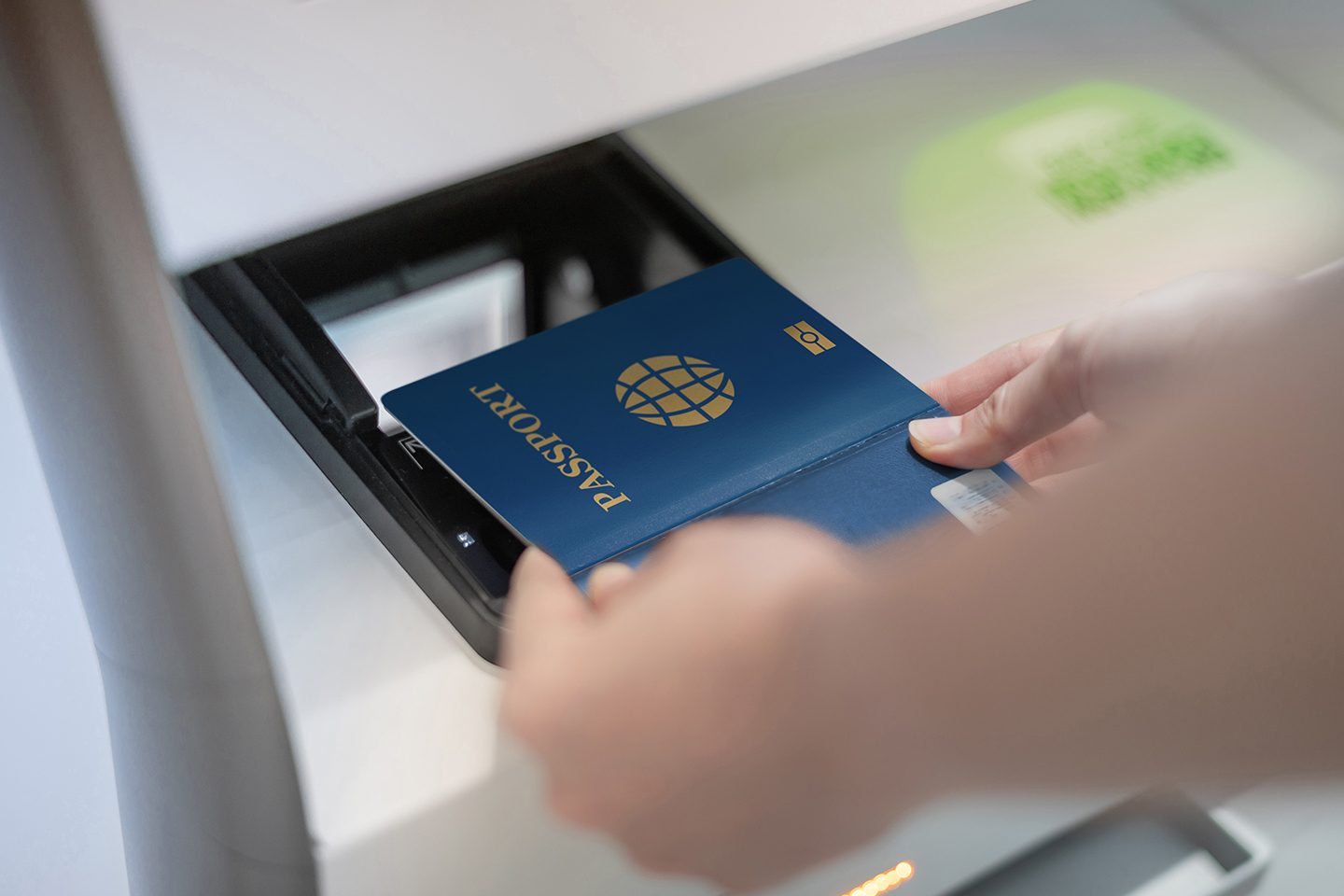
Female hand holding personal passport scanning at the self service checkin counter for get boarding pass at the airport terminal.

* Alemania, Austria, Bélgica, Bulgaria, Croacia, Dinamarca, Eslovaquia, Eslovenia, España, Estonia, Finlandia, Francia, Grecia, Hungría, Islandia, Italia, Letonia, Liechtenstein, Lituania, Luxemburgo, Malta, Noruega, Países Bajos, Polonia, Portugal, República Checa, Rumanía, Suecia y Suiza. Importante: Chipre e Irlanda aún no utilizan el EES. Allí los pasaportes de los viajeros/as se siguen sellando manualmente

Cómo ayudar a los viajeros/as a reducir sus tiempos de espera en el control de inmigración

Los viajeros/as pueden agilizar el trámite de inmigración introduciendo sus datos biométricos en un mostrador de autoservicio, antes de acudir al control de inmigración.
Estos mostradores están disponibles en numerosos aeropuertos, incluidos los hubs de Lufthansa en Frankfurt y Múnich. Recomienda a sus clientes que utilicen este servicio lo antes posible, a su llegada al aeropuerto, para reducir los tiempos de espera y agilizar el proceso.

The Entry/Exit System (EES) applies to travelers who are not nationals of a European Union country or of Iceland, Liechtenstein, Norway, or Switzerland (“third-country nationals”)2 and who either:

  • require a short-stay visa to travel to the European countries using the EES, or
  • do not need a visa for a short stay of up to 90 days within any 180-day period in the Schengen Area.

Good to know: Entry into the Schengen Area always takes place at the first airport of arrival, even if a connecting flight within Europe follows. Exit is always recorded at the last airport before leaving the Schengen Area.

2 Third-country nationals: travelers who do not hold the nationality of a country in the European Union (Austria, Belgium, Bulgaria, Croatia, Czechia, Denmark, Estonia, Finland, France, Germany, Greece, Hungary, Italy, Latvia, Lithuania, Luxembourg, Malta, Netherlands, Poland, Portugal, Romania, Slovakia, Slovenia, Spain and Sweden) or the nationality of Iceland, Liechtenstein, Norway, or Switzerland.

Passengers should ensure that they have all the necessary travel documents with them, including a valid biometric passport, and inform themselves about the current entry requirements.

How the Entry/Exit System’s registration process works

1

Travelers with a biometric passport scan their data themselves at a self-service system. A machine-readable biometric identity document is a prerequisite.

2

These self-service systems capture biometric data (facial images and fingerprints) together with the traveler’s name, passport details and their place of entry into and exit from the Schengen Area.

3

The route to the actual border control is signposted. The recorded data will be checked there. If there are no reasons for refusal, border control allows travelers to enter/exit. This, in turn, is stored in the EES.

Smart Borders Program from 2026 – ETIAS

In addition to the Entry/Exit System (EES), ETIAS will also soon be established. ETIAS stands for the European Travel Information and Authorisation System.  From the end of 2026, visa-exempt non-EU nationals (e.g. from the USA, Canada, Australia, Japan) must apply for an ETIAS authorization – a new electronic travel authorization – before entering the European Schengen Area. Currently, travelers do not need to take any action. Details will be published closer to the start date.

Further information can already be found on the European Union’s website.