

Partner Spotlight | Hotelplan


Hotelplan, a brand of DERTOUR Suisse AG, integrates Sustainable Aviation Fuel (SAF) into its travel offering through early secured volumes with SWISS, enabling its gradual introduction despite limited market availability.

In personal consultations, SAF is presented as a voluntary and transparent option to better understand and reduce flight emissions, supporting more informed and responsible travel decisions.

Through early procurement and clear communication, Hotelplan aims to make SAF tangible for customers while supporting the scaling of more sustainable aviation solutions.

The Interview

Hotelplan, a brand of DERTOUR Suisse AG, committed early to a SAF bulk deal with the Lufthansa Group. What was the strategic reasoning behind this decision?

Air travel by our customers is the main source of greenhouse gas (CO₂e) emissions. It was therefore clear to us from the outset that we wanted to offer our customers concrete options to help contribute to the decarbonization of the aviation industry.

Through the partnership with Swiss International Air Lines (SWISS), Hotelplan – now part of DERTOUR Suisse – addresses this directly within our travel offerings. SAF, which is produced from used cooking oils or animal fat waste, can generate up to 80% fewer emissions over its life cycle compared to fossil kerosene.

Since SAF is currently only available in limited quantities and is associated with high production costs, it was important for us to secure appropriate volumes early and make them accessible to our customers. At the same time, this commitment supports the further development and scaling of this pioneering technology.

You purchase SAF in advance and then introduce it in a customer-specific way during your advisory conversations—depending on their willingness to pay. How do you manage this balance between early commitment and maximum flexibility in the sales conversation?

Purchasing SAF in advance enables us to offer this option to our customers at a meaningful scale, despite the currently limited availability on the market. At the same time, it is important to us that SAF remains a voluntary choice. That is why we integrate the topic into our consultations in an individual and needs-based way, allowing each customer to decide for themselves whether and to what extent they would like to contribute to climate protection.

SAF is a deliberate advisory topic at Hotelplan and not a mandatory service. Why is this freedom of choice so central to your success?

Building on this principle, we offer SAF as a conscious and transparent option rather than a mandatory service. This approach enables customers to make informed decisions and choose a level of contribution that aligns with their individual values and priorities.

At the same time, this highlights the importance of consultation. SAF is a topic that requires explanation: its impact, availability, costs, limits and options need to be clearly contextualized. That is why we actively integrate SAF into our advisory conversations.

We are convinced that it is precisely the combination of voluntariness and active consultation that is important for the development of the SAF market. Through personal guidance, we raise awareness and understanding of the opportunities and limitations of SAF. At the same time, we observe that customers become more conscious of the environmental impact of their travel decisions. This awareness and the resulting demand (in 2025, one in three bookings containing a flight with Hotelplan included a SAF contribution) can, in the long term, also have a positive effect on the further development of the market

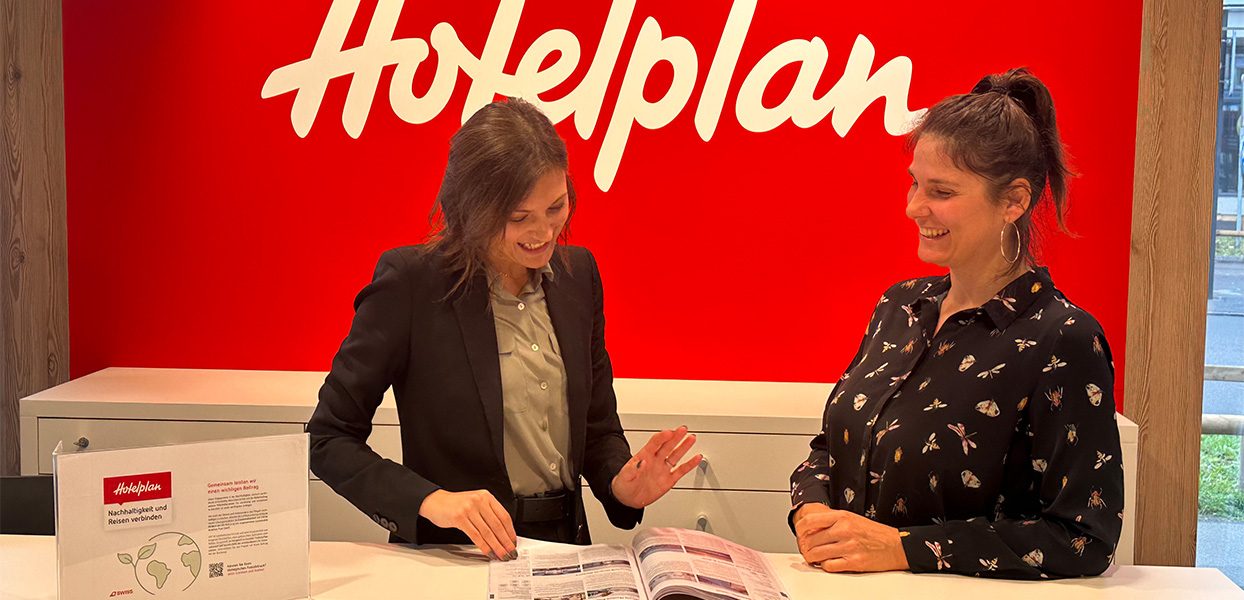
Many customers rarely choose SAF actively online, but do so significantly more often in personal advisory conversations. What do your advisors do differently in these conversations? How do you recognize openness to the topic, when do you introduce SAF, and how do you ensure it doesn’t come across as just an additional cost item?

In personal advisory conversations, there is an opportunity to explain SAF in a clear and contextualized way. Our advisors explain what SAF is, how the contribution works, and where its limitations lie. This makes this alternative fuel more tangible — not as a universal solution, but as a currently promising lever for reducing the climate impact of air travel.

In direct dialogue, it often becomes apparent that many customers are open to the topic once they better understand the background and its concrete relevance to their own trip. The goal is not to “sell” SAF as an add-on, but to transparently inform customers about options for climate protection contributions.

Which arguments or wordings have proven to be particularly effective—especially with customers who have no prior knowledge of SAF?

Our customers respond very positively to the opportunity to contribute to climate protection through SAF in relation to the emissions generated by their flight. What is particularly important is transparent and easy-to-understand communication. Many customers appreciate that we actively address the topic and explain it in a relatable way, for example using the illustration of used cooking oil that is collected and processed into fuel.

Clarity about what the contribution is used for is key—namely, directly supporting the production and further development of Sustainable Aviation Fuels. Once customers understand how SAF works and what impact their contribution can have, their willingness to engage with options for more sustainable travel often increases.

What have you learned from dealing with customers who are (still) critical of SAF today and how does this knowledge help you in future conversations?

We have learned that critical questions about SAF usually stem from a need for transparency and clear, understandable information. Because SAF is still a relatively new topic for many customers, there is often a desire to better understand its impact, its possibilities, and also its  limitations. That is why we focus on an open and factual dialogue in our consultations. The aim is not to convince, but to create understanding. Questions and critical feedback help us continuously improve our advisory approach and tailor our information even more closely to our customers’ needs.

Many people feel only “partially confident” when selling sustainable offers. What has specifically helped your teams reduce this uncertainty?

The uncertainty around selling SAF is understandable, as it is a complex and still relatively new topic. That is why it was particularly important to equip our teams with the necessary knowledge and confidence for customer consultations. A key element was hands-on training that not only provided background information on SAF, but also showed how to integrate the topic in a clear and relevant way into advisory conversations.

In addition, joint SAF events with SWISS helped make the technology more tangible for both employees and customers. Real-world experience from customer interactions is especially important: when employees see that customers respond positively and that consultations lead to a better understanding of the topic, their confidence naturally increases.

Sharing positive practical examples and experiences within the teams also helps reduce barriers and enables mutual learning.

Which information makes the decisive difference for customers between interest and an actual decision and where do you consciously also explain what SAF cannot achieve today?

For our customers’ actual decisions, what matters most is a clear, honest, and easy-to-understand framing of SAF. The goal is not to present SAF as a “silver bullet,” but to transparently show what contribution the technology can realistically make today. This honesty builds trust. Customers quickly notice when something sounds “too good to be true,” and tend to respond with skepticism.

A key part of the consultation is explaining how SAF works. The alternative fuel is blended into the existing aviation fuel system and contributes to reducing CO₂e emissions in that context. This understanding helps many customers better assess the concrete impact of their contribution.

At the same time, we clearly communicate that decarbonizing aviation is a complex challenge and that SAF alone will not be sufficient. Today, SAF is an important lever for making aviation more sustainable, but it must be complemented by further technological innovation, efficiency improvements, and long-term changes across the entire value chain.

We find that this combination of transparency, realistic framing, and a clear explanation of impact is what ultimately makes the difference—and supports customers in making an informed decision.

What still doesn’t work smoothly in SAF sales today and what one conversation or mindset would you recommend to others who want to address SAF more often, but are (still) not ready for larger commitments such as a SAF bulk deal?

SAF remains a topic that requires explanation, and this is still one of the biggest challenges today. Personal context and consultation are often crucial for customers to understand the impact and concrete benefit of SAF, which makes online sales more difficult. In addition, media criticism of SAF can create uncertainty that needs to be actively addressed.

Our most important learning is to consistently bring SAF into conversations in an honest and understandable way, to openly address questions, and to clearly present travel options with less negative and more positive impact. This is how trust, awareness, and ultimately long-term acceptance are created.

Are you an industry expert? Become part of the Lufthansa Group airlines eXpert program and stay ahead with exclusive product updates, booking tips, webinars, and member-only resources.