Published 19.05.2025
The Lufthansa Group uses artificial intelligence to reduce food waste
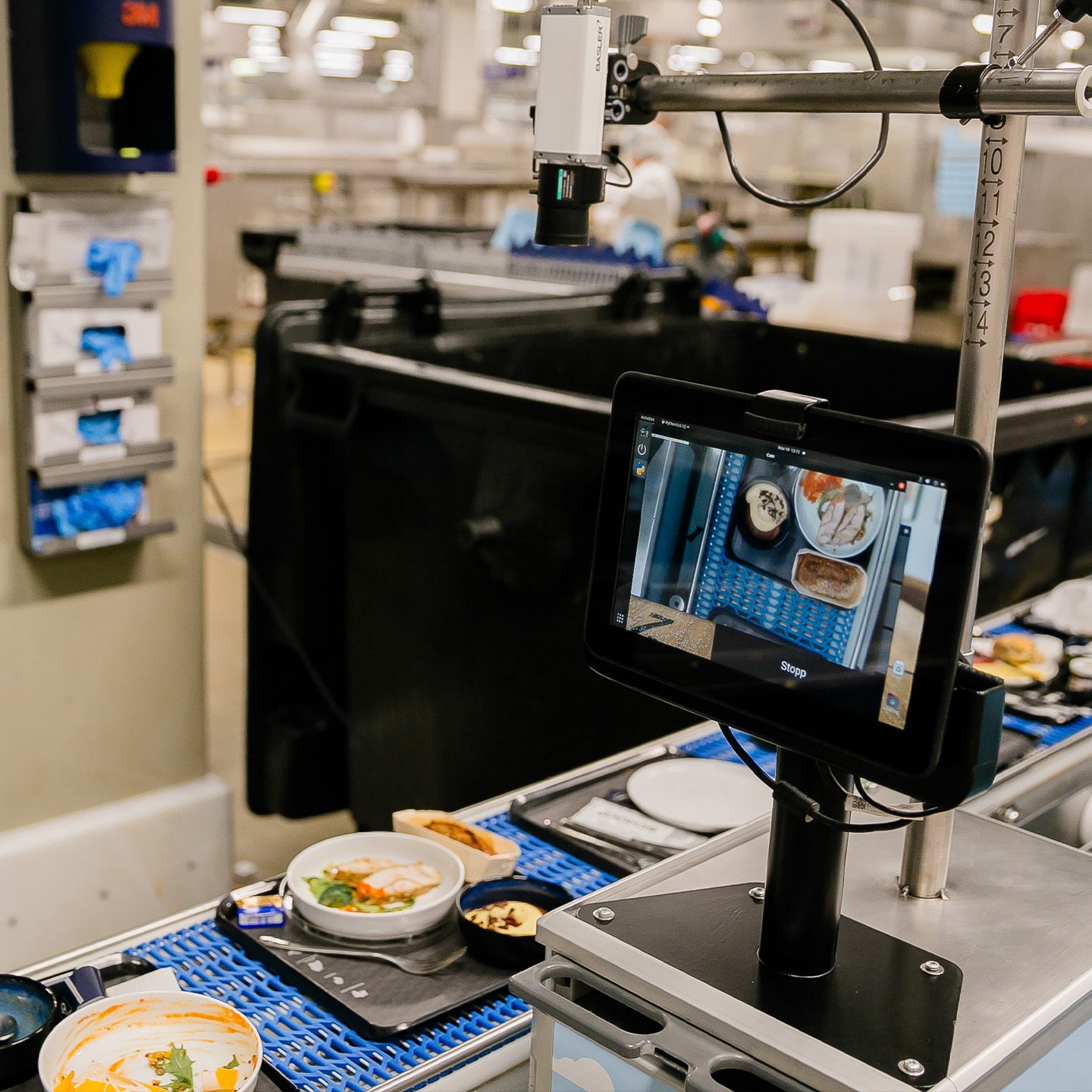
With the "Tray Tracker", the Lufthansa Group has developed an innovative, AI-supported solution to measure and reduce the return of meals on board. The mobile technology scans the returned meals from in-flight catering at the dishwashing line. Artificial intelligence recognizes whether a meal has been partially eaten, fully eaten or left untouched. The flight route, travel class and meal concept are also included in the analysis. The insights gained will enable an optimized portion size and menu selection in future. The "Tray Tracker" will also help to reduce CO₂ emissions in the future, as avoiding overloading will reduce the overall weight. At the same time, less food is transported, consumed and disposed of.
Lufthansa has been using the innovation at its Frankfurt site for almost a year. The AI has also recently started scanning trays in Munich. In future, the "Tray Tracker" will also be used at other Lufthansa Group locations and by other airlines. The innovative mobile device was developed by the Lufthansa Group Digital Catering Analytics team in collaboration with the Lufthansa Group subsidiary zeroG.
Another Lufthansa Group project to avoid food waste is based on machine learning and is called "Pendle". This initiative, launched by the Lufthansa Innovation Hub in 2024, uses algorithms that analyze data points such as flight duration, flight route and previous demand in order to optimize loading. In the long term, the two projects are to be linked.
More environmentally friendly products on board
The Lufthansa Group pursues various measures and projects to reduce food waste on board as much as possible and to optimize loading. Passengers on short and medium-haul flights operated by Lufthansa, Austrian Airlines and SWISS can pre-order their preferred meal and use the "to go" offer to purchase all fresh products at a reduced price on the last flight of the day. Premium Class passengers on intercontinental flights operated by these airlines can select their main course at the hubs before departure. This measure also helps to reduce food waste caused by overloading. In addition, the focus is on switching from disposable plastics and aluminum to more sustainable alternatives. Since 2022, a third of these items have been replaced on board.